Scale factor worksheets using landmarks help students connect math to places they recognize like the Statue of Liberty, Golden Gate Bridge, or local city hall. Instead of abstract numbers, learners measure a photo of a landmark, compare it to its real height or length, and calculate the scale. This makes ratio and proportion concrete, memorable, and grounded in reality.
What does “real world scale factor worksheet using landmarks” actually mean?
It’s a printable or digital activity where students use actual landmarks such as the Eiffel Tower, Empire State Building, or even their school building as reference points to practice finding and applying scale factors. For example: a worksheet might show a 5 cm drawing of the Washington Monument and state its true height is 169 meters. Students convert units, set up a ratio (5 cm : 169 m), simplify it, and express it as a scale factor like 1:3380. These worksheets reinforce measurement conversion, unit consistency, and proportional reasoning all while staying rooted in something real.
When do teachers and students use these worksheets?
Most often in middle school math units on ratios, proportions, and geometry transformations. They’re also useful for cross-curricular lessons in geography or social studies say, when studying U.S. landmarks and introducing map scales at the same time. You’ll find them used before field trips (to estimate distances between monuments), during project-based learning (designing a mini-city with scaled landmarks), or as review before standardized tests that include word problems about scale.
How is this different from other scale factor worksheets?
Unlike generic scale factor exercises with unnamed rectangles or abstract shapes, landmark-based worksheets tie math to shared cultural knowledge. A student who’s never seen a blueprint may recognize the Sydney Opera House. That familiarity builds confidence and reduces cognitive load. It also supports visual learners many worksheets include labeled photos or satellite images alongside measurements. If you’re looking for more context on how scale appears across different applications, our model train layout planning worksheet shows how the same math applies to hobbyist modeling.
What common mistakes should students watch out for?
- Forgetting to convert units before calculating comparing centimeters to meters without adjusting leads to wildly incorrect scale factors.
- Reversing the ratio (writing scale factor as “actual : model” instead of “model : actual”), which flips the meaning entirely.
- Using inconsistent landmark data some websites list the Great Pyramid’s height as 138 m, others as 146.5 m. Worksheets should cite a clear source or use rounded, classroom-friendly figures.
What’s a good way to start using these worksheets?
Begin with one landmark and two measurements: a clear image with a labeled dimension (e.g., “This drawing of Big Ben is 8 cm tall”) and its verified real-world height (96 m). Guide students through unit conversion first (96 m = 9600 cm), then forming the ratio (8 : 9600), simplifying (1 : 1200), and interpreting (“1 cm on the page equals 1200 cm about 12 meters in real life”). Once comfortable, try comparing two landmarks side-by-side, like the Space Needle and CN Tower, to explore relative scale. Our map-focused worksheet extends this idea into navigation and distance estimation.
Where can you find reliable landmark measurements?
Official tourism sites (like nps.gov for U.S. national monuments), architectural records, or engineering databases are best. Avoid crowd-sourced pages unless verified. For classroom use, rounding to the nearest meter or foot is fine as long as it’s consistent across the worksheet. One helpful resource is the font name collection, which includes downloadable worksheets with clean, readable labels for printed materials.
What should you do next?
Pick one landmark your students know well maybe the local courthouse, a nearby water tower, or a famous bridge. Find its official height or length. Take or print a clear side-view photo. Measure the landmark’s height on the image in centimeters. Then write a short worksheet prompt: “This image of [landmark] is ___ cm tall. Its real height is ___ m. What is the scale factor? Show your work.” You can adapt this approach from our dedicated landmark worksheet page, which includes ready-to-print examples with answer keys and teaching notes.
 Planning Your Model Train Layout with Scale Factor Worksheets
 Applying the Scale Factor in Map Worksheet Problems
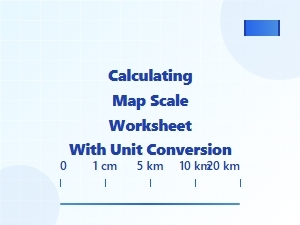 Mastering Map Scale and Unit Conversion Exercises
 Analyzing Battle Maps with a Scale Factor Worksheet
 Understanding Scale Factor Problems in Design
 Beginner Scale Factor Drawing Practice on a Grid