Using a scale factor worksheet to analyze historical battle maps helps students and history enthusiasts translate distances on old maps into real-world measurements like how far troops marched, how wide a battlefield was, or how close artillery positions were to enemy lines. It’s not just math practice; it’s a way to read maps the way commanders did, with attention to proportion, distance, and terrain.
What does “scale factor worksheet analyzing historical battle maps” actually mean?
A scale factor worksheet for historical battle maps is a focused activity where learners calculate or apply the ratio between map distance and actual ground distance using real examples like the Battle of Gettysburg, Waterloo, or the D-Day landings. The scale factor might be given (e.g., 1:25,000), or students may need to derive it from known landmarks shown on the map. Unlike generic scale worksheets, these use authentic cartographic sources often scanned originals from archives with irregular layouts, faded ink, or hand-drawn features that add realism and mild complexity.
When would someone use this kind of worksheet?
Teachers assign these during units on military history, geography, or applied math especially when studying how terrain influenced outcomes. Students use them to measure distances between trenches at Verdun, estimate cavalry movement ranges across the fields near Austerlitz, or compare the scale consistency across different 19th-century mapmakers’ work. Hobbyists and wargamers also use similar exercises to plan tabletop recreations, often referencing the same proportional reasoning used in model train layout planning.
How do you start with a real historical map?
First, identify the map’s stated scale look for a bar scale, verbal scale (“1 inch = 1 mile”), or representative fraction (e.g., 1:63,360). If it’s missing or unclear, use two identifiable points with known real-world distance (e.g., “Château de Hougoumont to La Haye Sainte = 750 meters”) to compute the scale factor yourself. Then apply that factor consistently across measurements. For example, if 2 cm on the map equals 500 m on the ground, the scale factor is 1 cm = 250 m or 1:25,000.
What mistakes do people make and how to avoid them?
One common error is mixing units without conversion measuring in centimeters but forgetting to convert map cm to real-world meters or kilometers. Another is assuming all parts of an old map are equally accurate: many 18th- and 19th-century battle maps exaggerate key features (like hills or roads) for clarity, so scale may vary slightly across the sheet. Also, students sometimes treat grid lines or marginal notes as part of the scale when they’re often decorative or administrative. To stay grounded, cross-check one measurement against a known landmark distance before scaling others. You’ll find unit conversion guidance built into our worksheet designed specifically for those transitions.
What kinds of problems show up on these worksheets?
Typical questions include: “On the 1862 Antietam campaign map, the distance from Dunker Church to West Woods measures 4.3 cm. If the scale is 1:12,000, how many meters apart are they in reality?” Or: “A sketch map of the Siege of Vicksburg shows a 3 cm gap between Union trenches and Confederate batteries but the only scale clue is ‘1 inch represents 400 yards.’ Convert and calculate.” These mirror real analytical tasks, and you can practice more of them in our collection of word-based map scale problems.
Any practical tips for working with older maps?
Yes. Use a fine-tip ruler not a flexible tape measure to avoid distortion on brittle paper scans. Note whether the map uses miles, leagues, or versts: some Napoleonic-era maps use French leagues (~4.4 km), not English miles. If printing, check that your PDF viewer isn’t zooming the image always verify the printed scale bar matches the original. And if handwriting labels or measurements, try the Chivo Font for clean, readable annotations it’s legible even at small sizes.
What should you do next?
Pick one verified historical map like the Library of Congress’s public-domain copy of the 1863 Gettysburg map and complete three tasks:
- Locate and record its stated scale (bar, verbal, or RF)
- Measure the distance between two labeled features
- Calculate the real-world distance using the scale factor
 Calculating Scale Factors with Famous Landmarks
 Planning Your Model Train Layout with Scale Factor Worksheets
 Applying the Scale Factor in Map Worksheet Problems
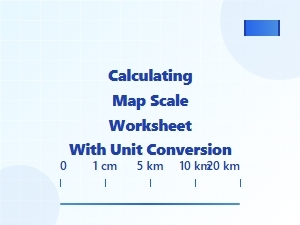 Mastering Map Scale and Unit Conversion Exercises
 Understanding Scale Factor Problems in Design
 Beginner Scale Factor Drawing Practice on a Grid